"If we still believe in ourselves that one day, our country will practice Democracy, wiping out every piece of the current army trash led by General Than Shwe, and we are striving for it no matter what the costs will be, our belief will become the reality."
~Kyal Zin Lin Latt

Wednesday, September 15, 2010

Suu Kyi’s party bids farewell

By Aye Nai and Khin Hnin Htet

The National League for Democracy, headed by detained Burmese opposition icon Aung San Suu Kyi, has been officially dissolved along with four other parties, state media has announced.

The formal disbandment was “expected this since the beginning”, National League for Democracy (NLD) deputy chairman Tin Oo told DVB. The party had refused to register for controversial elections on 7 November, which according to Burmese law meant it could no longer function within official Burmese politics. “Whether this is right or wrong, [the junta] would still do it,” he added.

Also included in the list of dissolved parties was the Shan Nationalities League for Democracy (SNLD), which came in third behind the NLD and the junta-backed National Unity Party (NUP) in the 1990 elections, the last time Burma went to the polls.

Tin Oo said that despite the disbandment, the party will continue to “exist within our group. We will no longer have our flags and the offices but we will continue to be active.” He added that it was not clear whether legal action would be taken by the junta if it continues to “move around in a group”.

Along with the NLD and SNLD, the Union Pa-O National Organisation, Shan State Kokang Democratic Party and Wa National Development Party have also been dissolved. The state-run New Light of Myanmar newspaper said today that, “As those parties no longer have the right to continued existence as political parties, their registrations have been revoked and they have been dissolved”.

Following its decision not to compete in elections, due largely to laws that ban Suu Kyi from participating, senior NLD members said the group would turn its focus towards social work. A number of Central Executive Committee members are currently touring upper Burma to meet with isolated communities there.

“We were not touring around as an organisation but just travelling around with caution,” said Tin Oo. “We are not worried too much as our [activities] are peaceful and we already expected these things to happen.”

Aye Thar Aung, secretary of Committee Representing the People’s Parliament (CRPP), an umbrella group of 1990 election-winning parliamentary representatives that includes NLD and SNLD members, said: “Although the NLD and other parties who won the elections in 1990 are now dissolved, they still have their duty for the people. We assume the NLD will continue with its duties.”

He added that the CRPP “will discuss…about the NLD and the SNDP’s continuing of the national duties”.

The Election Commission, which acts as the supreme authority during the election period, said that 37 parties will now compete in the 7 November polls. Parties have from 24 September to 30 October to canvas on television and radio providing they submit a manuscript to the EC seven days in advance.

Reference:

This is from DVB (Democratic Voice of Burma) by the authors Aye Nai and Khin Hnin Htet.

My opinion:

Though the junta can do whatever he wants by disbanding NLD, he cannot take NLD away from civilians' hearts. Whether the junta acknowledges NLD or not, NLD is still NLD for the civilians. That's it.

Tuesday, September 14, 2010

Activist monks call for election boycott

By Aye Nai

An underground Burmese monk activist group has urged would-be voters across the country to boycott the 7 November elections.

The call was made by the All Burma Monks’ Alliance (ABMA) yesterday as proceedings get underway to mark the three-year anniversary of the September 2007 monk-led uprising.

“We are calling on the people of Burma to boycott the 2010 elections, which are intended to transform the military dictators into a legitimate government, by not voting,” said ABMA spokesperson Dhamma Siri.

The statement made reference to the 2008 constitution, which awards 25 percent of parliamentary seats to the military prior to voting, whilst it claimed that the junta-backed Union Solidarity and Development Party (USDP) will likely dominate the remaining seats.

Asked whether their will be more freedom for Buddhist monks under the post-election government, Dhamma Siri said it was unlikely. “There are a lot of interferences – harassments in a way – on religious affairs by the current coup government.

“They play nice and rough with us by utilising their power in many different ways, so there is no way the new government formed by this military junta will be good.”

The ABMA is formed of key players in the September 2007 uprising, which has come to be known as the Saffron Revolution in testament to the thousands of saffron-robed monks that took to the streets of Burma before a bloody crackdown on 26 September.

Calls for a boycott of Burma’s first elections in 20 years have been spearheaded by detained opposition icon Aung San Suu Kyi, who is banned from competing and whose party, the National League for Democracy (NLD), was dissolved following its decision not to run.

There looks set to be 42 parties competing for seats in the new parliament, although the USDP, with nearly 1000 candidates across the country, has a clear advantage. In contrast, the National Democratic Force (NDF), which was born from the ashes of the NLD, will field 161, a figure significantly lower than the USDP but still a healthy one compared to other opposition and ‘third force’ parties.

Reference:

This is from DVB (Democratic Voice of Burma) by the author Aye Nai.

My opinion:

It is good news that at last there are civilians who lead to boycott the election. Let's see what will be happening.

Monday, September 13, 2010

NLD elders needing medical treatment

By Shwe Aung and Khin Hnin Htet

Senior National League for Democracy (NLD) member Win Tin is in hospital with breathing problems while his colleague, Tin Oo, may have to fly to Singapore for surgery on his eye.

The two luminaries of Burma’s pro-democracy movement are both in their eighties. Win Tin, who spent 19 years in prison and ranks as Burma’s longest-serving political prisoner, is 81. A close aide, Maung Maung Khin, said that he was submitted to Asia Royal General Hospital in Rangoon on Sunday morning.

“It’s not very serious. He began to cough up a lot and was having difficulty breathing so we had to send him to the hospital,” she said. “He’s being checked up by doctors and is on medication. He began getting much better after he was given oxygen.”

Meanwhile, NLD deputy Tin Oo may have to fly to Singapore for treatment on a lasting eye problem.

“Right before I was released [from house arrest in February] I lost sight in my left eye after plasma started seeping out of the centre of the eye,” the 83-year-old told DVB. “I can still see with my right eye but I can’t see people clearly so I will have to get treatment, perhaps laser treatment.”

The condition has been going on for about eight months and he has been using eye drops for three months. “If that doesn’t work, then I will need to have an operation – I’m preparing for that now,” he said.

“I have applied for my passport. It has not yet been granted but I think I will get it. Basically, I don’t have to go through the [passport application] myself as the hospital [in Singapore] will take care of it when I register there as a patient. There is only one concern; about the accommodation there. It would be difficult for me to rent a place.”

Tin Oo was released earlier this year after spending six years under house arrest. He had been arrested along with NLD leader Aung San Suu Kyi in May 2003 after the Depayin massacre, when a junta-backed mob attacked a convoy of NLD supporters, killing around 70.

By that point Win Tin had already been in prison for 14 years, having been arrested in July 1989 on charges that included “anti-government propaganda” – as well as being a senior NLD member from its inception in 1988, he was also a prominent journalist.

Burma’s healthcare system is notoriously poor, with the military government thought to spend only US$0.70 per person each year on healthcare.

Reference:

This is from DVB (Democratic Voice of Burma) by the authors Shwe Aung and Khin Hnin Htet.

My opinion:

I'm sorry to hear the news about these two. NLD has mostly elderly people who come aged, and I feel like NLD might need more young activists. Anyway, I wish these two get well soon.

Friday, September 10, 2010


Bago shootings spark riot fears

By Agence France-Press

Fears that the deaths of two young men shot in a quarrel with troops could spark unrest prompted Burma state media to insist Friday that the incident was “not a fight” between the army and the public.

As authorities try to avoid anti-government feeling ahead of the country’s first elections in two decades, the New Light of Myanmar said the violence that killed Soe Paing Zaw, 19, and Aung Thu Hein, 23, was “just a drunken brawl”.

The paper claimed there was a “plot” to use the incident to provoke riots in the country, adding people wanted to help the state “wipe out such elements provoking mass protests for political gains”.

“The government is now gearing up hand in hand with the people… (to take) action against those elements deceiving the people into taking to the streets with the intention of destroying State stability and peace,” it said.

Soe Paing Zaw and Aung Thu Hein, who were shot dead on Saturday night in Bago, north of Rangoon, were hurriedly cremated in the town on Tuesday afternoon amid tight security, according to witnesses.

A memorial service at their homes in the town on Saturday is also expected to be heavily guarded as the junta tries to avoid unrest ahead of the 7 November vote – although there have not been any reported protests so far.

An unnamed Burmese security officer said authorities would keep tight control over the situation as they “do not want any unrest ahead of the election”.

The pair were killed after a taxi they were travelling in with five others was hit by a motorcycle carrying two army officers, who had been drinking beer nearby.

According to the report, one officer ran away from the fight and came back with four security troops from Bago Railway Station, one of whom fired the fatal shots.

“In reality, it was just a drunken brawl in the street between some young soldiers and some young civilians, not a fight between the Tatmadaw and the public,” the paper said, using the term for Burma’s feared military. “Such cases take place sometimes,” it added.

The report said that a lawsuit had been filed against the servicemen involved and stressed a “fine tradition” of punitive action being taken against offending soldiers.

It did not mention how many people would face the lawsuit, but soldiers who are to be prosecuted are thought likely to be dismissed from the army before facing criminal proceedings.

“Officers concerned called at the houses of the two victims to beg the pardon of their parents,” the paper said.

Burma, which has been ruled by the military since 1962, has seen sporadic eruptions of civil unrest over the years, but most have ended in a bloody victory for the junta.

The country has banned civilians from holding any weapons and strictly controls press and other freedoms to maintain an iron grip on power.

Upcoming elections – the first since democracy icon Aung San Suu Kyi was denied power after her party’s landslide victory in the 1990 polls – have been criticised as a sham aimed at putting a civilian face on military rule.

Reference:

This is from DVB (Democratic Voice of Burma) by the author Agence France-Press.

My opinion:

It is really horrible to use words in such a way that military authorities or soldiers should not be blamed though they bullied the civilians with deadly weapons. And, the junta totally ignores the civilians. Their lives were as if toys in military rulers' hands. It is really disgusting and cruel of the junta!!!

Than Shwe tips a hat to China

By Agence France-Press

Burma’s junta leader Than Shwe on Thursday thanked China for its support of his isolated state and pledged to work with Beijing to maintain stability on their sometimes troubled border.

The 77-year-old senior general made the comments in talks with Premier Wen Jiabao — the last in a series of meetings with top Chinese leaders before he headed to Shanghai to visit the World Expo on Friday.

Than Shwe, whose regime is often criticised in the West for its human rights record and political repression, told Wen he “appreciated China’s aid and support over the years”, according to the Xinhua news agency.

China has long helped to keep Burma afloat through trade ties, investments in its large natural resources, arms sales and by shielding it from UN sanctions over rights abuses as a veto-wielding member of the Security Council.

In return, China is assured of a stable neighbour and access to raw materials such as teak and gems from Burma, which has been ruled by the military since 1962.

Ties frayed last year when fighting between junta forces and rebel ethnic armies drove tens of thousands of refugees over the border into China, which issued a rare admonishment to Burma.

But Than Shwe told Wen his country would work with China to “jointly maintain peace and stability of the border regions”, Xinhua reported.

The junta leader arrived in China on Tuesday for a state visit two months ahead of Burma’s first election in 20 years.

Beijing has hailed the poll as an “important step” on the path to democracy, while Western governments and activists have denounced it as a sham that will only entrench military rule.

“A smooth election in Myanmar [Burma] is in the fundamental interest of the Myanmar people and conducive to regional peace and stability,” Chinese foreign ministry spokeswoman Jiang Yu told reporters on Thursday.

“China respects the independently chosen development path of the Myanmar people and hopes that the election can proceed smoothly.”

Than Shwe told Chinese President Hu Jintao on Wednesday that he hoped to “further promote the already existing neighbourly friendship, mutual cooperation and trust between the two countries” during his visit.

The Burma strongman was to visit the southern Chinese boomtown of Shenzhen, on the border with Hong Kong, before heading home on Saturday.

Reference:

This is from DVB (Democratic Voice of Burma) by the author Agence France-Press.

My opinion:

Well, if China is telling Western countries like US not to involve in Burmese inside cases like election, China should not also be involving in Burmese issues because China is also a different country, not Burma. It is really disgusting of China to support the junta in order to get resources like natural gas from Burma for its own country. Be considerate of Burmese civilians, not just Chinese!!!

Tuesday, September 7, 2010

Bodies of Bago shooting victims kept by army

By Naw Noreen

The funerals for two men shot dead by Burmese troops after a dispute in Bago are being arranged by the army, with families blocked from seeing the bodies, relatives said.

The two, Aung Thu Hein, 22, and Soe Paing Zaw, 18, were killed in the early hours of 5 September after a quarrel over damage to a motorbike broke out. Eye-witness reports said that a fist-fight between an army captain and five men followed, before the captain telephoned to troops. A group arrived at the scene, after which the two were shot, each receiving four to six bullet wounds in their chest and head.

According to the families of the two, the army had promised it would return the bodies but later reneged after some 2000 people protested at the Bago mortuary where they were being kept.

Aung Thu Hein’s aunt was also blocked from entering the mortuary on Monday to retrieve his body.

“We were told there was no need for the families to carry [the bodies] to [the cemetery] as the army has arranged everything with the [local Myanmar] Red Cross,” she said. “They said we can just attend the funerals at ease as they will be doing everything, including carrying the bodies onto the hearses.”

Extra troops have now been deployed in Bago’s Zaiganai ward where the shooting took place and will remain there until after the funeral, while the family has been told to keep locals calm as fears of a riot grow.

The aunt said that Aung Thu Hein’s mother was offered one million kyat (US$1,000) compensation by the army, but she refused.

“We don’t want that one million kyat,” said the aunt. “We are just sad that they killed my innocent nephew just because they can carry guns. Those soldiers think they can do things like that when they receive their training. We are not taking the money.”

Rumours had circulated that the two were killed after attempting to wrestle the guns from the troops, but this has not been confirmed.

Already this year, two incidents involving police and troops in Bago division have made headlines. In May, a young boy who refused to be recruited by the army in Pyontazatown town was shot dead by troops, while three months later a group of civilians were detained overnight in a Bago police station where they were beaten and tortured by policemen.

Reference:

This is from DVB (Democratic Voice of Burma) by the author Naw Noreen.

My opinion:

This is what is truly happening in Burma. Every government authority bullies the civilians with weapons. And the junta never takes care of such cases. The lives of civilians are totally ignored!!! Disgusting!!!

Monday, September 6, 2010


The Senior General that never is

By Soe Min Naing

Buried deep within secret Burmese army files obtained by DVB is a recording of Senior General Than Shwe in late 2005 speaking to top-level military officials during a four-monthly meeting.

“If we look at the list of fallen people, you will see that 38 people fell, and one person went missing; 59 persons wounded, 21 weapons were lost…” he says on the losses suffered by his army.

The record reveals the mindset and intellectual depth of a general who has been controlling Burma for more than a decade. But it also highlights problems faced by Burmese leaders everywhere, who struggle to provide positive leadership due to self-deception and an inability to adapt and accept criticism for fear of ‘losing face’.

Senior leaders want the participation and contribution of younger generations, but at the same time are unable to take into account what the new generations really want, and where they can perform well. The mentality of ‘old people know best’ is still widespread both in military and political circles in Burma, despite the rhetoric of wanting to build a ‘new, democratic’ society for future generations.

Than Shwe begins in a clear and sonorous voice, but the more you listen to the 50-minute speech, the more you realise his frustration, anger and helplessness. In order to make his point, the 72-year-old often uses long sentences, rhetorical questions and even humour. They are cobbled together in a repetitive way, sometimes using the omniscient tone of a Buddhist monk preaching his way to Nirvana, sometimes with the bullying tone of a schoolmaster admonishing his taciturn pupils.

“[Deserters] might run away because they could not bear the hardship of the battleground. And they might run away because they are afraid. And, they might run away because we treat them badly.”

However he falls short of facing up to the fact that soldiers desert because they have lost faith in the army or the regime itself. So, like a true despotic paternalistic Burmese leader, Than Shwe piles all the blame on his nearest henchmen, the commanders. The onslaught of blame first sounds like a soul-searching practice but it then tapers into a self-satisfying, pathetic moan.

“What is possible though is the majority run away because of the weakness in our treatment of them and administration… even if he ran away because he could not tolerate the hardships in battlefield, you need to make him able to endure it… if it is a question of cowardice, it could be cured…”

From this point on, the speech imperceptibly turns into a monk-style sermon combined with the tone of a sentimental drunkard philosophising over life and death. His assertions are incongruous and inconsistent, and constantly undercut each other.

“I said it before, no one is born with the habit of killing and slaughtering. We have to train our heart [to do it]… There is no one who is not afraid of dying. We are all afraid to die. Only God, saints and martyrs are not afraid of dying – I read it in books.”

And with a sense of pride he relates how his old friends and teachers, some village thugs, trained soldiers to be tough in order to illustrate the point that you have to be cruel to be kind.

“I was thinking to myself, he is such an inhumane person, such a barbarous person. ‘What are you doing that for?’ I asked. ‘What is the matter with you, lieutenant?’ he said. ‘If you feed them well here, they won’t have any endurance on the battlefield. You have to train them now so that they can endure it later.’ Yeah, that was not good but this has its own logic…”

“When you recruit, don’t let in military traffickers… they enter from one army and take all the materials they could grab and run away and join the other…if you see these army traffickers send them for about seven years in jail… during wartime, you can even give them up to death sentence. You are allowed to give death sentence during war time… You need to treat [them] like that…”

It is chilling to hear the way he utters the word death sentence with casualness. Notice how he just moots the idea and leaves it to his followers to interpret what he means exactly, as it is neither a proper order nor a passing remark – a devious practice often used by powerful leaders in order to avoid direct responsibility when things go wrong. Many innocent people were punished or even killed by soldiers with this kind of informal order in Burma.

He then tells his commanders to treat new recruits with respect and humanity, littering his speech with English translations in an attempt to appear intellectual and to impress his commanders:

“…A human being has ‘attachment’; ’attachment’ in English means sticking to, connected with one another… that is attachment. As for you, whatever you say, when a new soldier comes in, you need to treat him sweetly and courteously. It is necessary that he comes to love the army…If you do that they will have the attachment for you.”

For one thing, it never seems to occur to Than Shwe that the army or the country can’t be improved by just giving ‘necessary instructions’ without addressing real problems facing them. His rant is followed by a truly ironic remark given the wider context:

“Confidence and understanding are very important. In politics too, confidence and understanding are important. Confidence and understanding are important when nations deal with each other. For us too, confidence and understanding are important everywhere. If you treat them like that, confidence and understanding will rise voluntarily.”

He appears to ignore the fact that he himself fails to treat the opposition leader Aung San Suu Kyi with confidence and understanding for the sake of the country, inadvertently highlighting his own hypocrisy. Having realized the weakness in his argument, Than Shwe cracks a ‘joke’, using the analogy of his favourite sport, football, to ease the tension. But no one seems to find the joke funny, or it is likely that they dare not laugh out loud for fear of offending him unwittingly.

“I will tell you a funny thing… Some people just watch the game ball [ballgame] and do nothing. Forget the game ball. Just leave it and game it, am I right? Just call it a game. (giggle) Just game it straight away…(laughing)…Just cancel the game ball. The game ball doesn’t work anymore…

“Make sure that the training is not exploitative training. It used to have a bad name because it used to be ‘exploitative’, ‘exploiting’ group (giggles)… I don’t know whether that kind of thing still exists. You watch out for that. Don’t let yourselves be exploiting training.”

That, however, is more easily said than done. Than Shwe and his commanders know how difficult it is to command and reorganise a demoralized army, not to mention a rundown country with diverse racial backgrounds and interests. It is not that the generals do not want to carry out their duties well, but it seems that they do not have real political will to help the army or the country.

Moreover, those who have the will and the vision are often attacked and marginalised by those who only have the trickery and position, as the system itself is based on fear, flattery and intrigue. Than Shwe’s solution for improving the system is simple: try to persuade those not in accordance with your liking, and if they do not accept your advice, kick them out: “If you see people who are fed up, remove them”.

Having failed to give any feasible direction to his commanders, the speech meanders back to the importance of mentality, discipline and skill, but with a new analogy. “If you can’t train them in the training, it will become very difficult. The reason is it is already ruined at the stage of conception… There is no reason for the foetus to become good…”

At this stage, the speech resembles the middle section of a traditional Burmese orchestral performance with indecipherable cacophony as he touches on every subject from firing weapons accurately, pregnancy and foetuses, to training schools and the curricula, chanting words like mantras and sutras. Than Shwe’s speech might not be as long as Fidel Castro’s famed monologues, but it is just as boring and soul-numbing. But his special anger is reserved for deserters and he cannot help but express his anger against them.

“They kill their officer and join the rebel, take away the guns and landmines and mine our own troop; what kind of persons they are, I don’t know. They have no sense of ‘thanyawzin’ [attachment]. If you mine your own troops, you won’t have attachment to your troops, would you? Isn’t it? They are people like that. It shows that the mentality you have instilled itself is weak.”

He then promises his commanders that the Burmese army “will become a modern army without fail… It has to be a strong, capable, modern, trained army… Everyone has responsibility and you all need to fulfil it…It is not enough that you can fight because you are only army officers; officers have to do all.”

The full meaning of “officers have to do all” becomes clearer when another senior general tells the commanders that “combat is temporary and administration is eternal”, reiterating the army’s unwillingness to give up power despite the promise of a civilian government after elections this year.

The speech was delivered one year after Than Shwe’s main rival, former intelligence chief Khin Nyunt, was officially ‘permitted to retire for health reasons’, or more likely ousted by Than Shwe himself. Than Shwe and other senior generals do not like Khin Nyunt, who is younger and more intelligent, and they felt they were being upstaged by his popularity and success with persuading armed ethnic groups not to fight against the army.

Than Shwe in particular feels aggrieved and wronged by the way “young Turks” like Khin Nyunt are allowed to take advantage of his “goodwill”. But what he cannot admit is that he is a frustrated man who has been unable to learn new tricks after assuming the top position. He appears and sounds like a mannequin wrapped in a uniform that symbolises his power but which to comical effect hangs on him like an ill-fitting suit; the slave of his own uniform.

It will be interesting to see what Than Shwe does after the election if he is forced to ‘retire’ by his ‘elected’ comrades. Will he spend his remaining days in a monastery to atone for his violent past and declare himself a Buddha to be, or will he be still clinging to the uniform and to power? Whatever is the case, he will be replaced by another man in uniform sooner or later, and Burma will not fare better if he retains the same mentality as his predecessors.

Reference:

This is from DVB (Democratic Voice of Burma) by the author Soe Min Naing.

My opinion:

It is interesting to read this secretive news about General Than Shwe. But, it is the life of a human being who is cruel and authoritarian totally giving trouble to the civilians. It should be that way without happiness, self-satisfaction, self-improvement and most important of all integrity.
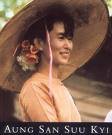

Suu Kyi warns on ethnic armies

By Maung Too

Growing pressure from the Burmese government on ethnic armies to transform into Border Guard Forces (BGF) could spell gloom for Burma’s future, detained opposition icon Aung San Suu Kyi has warned.

Rather than threatening force against ceasefire groups who refuse the transformation, dialogue should be sought, she told her lawyers Nyan Win during a meeting on Saturday.

“Daw Aung San Suu Kyi said she had learnt there are disagreements between the ceasefire groups and the authorities and that she worried about it,” said Nyan Win. “She said that matters like this should be solved via negotiation for the good of the country’s future.”

The sentiment was echoed by the secretary of the Committee Representing the People’s Parliament (CRPP), Aye Thar Aung, who said that the tensions should be worked into a “peaceful solution”.

The Burmese junta has said that continued refusal of the transformation would be met with war, although the majority of Burma’s ceasefire groups have rejected the BGF move, which would see lower-ranking troops assimilated into the Burmese army.

Both the Kachin Independence Army (KIA) and the New Mon State Party (NMSP) formally announced their refusal on 1 September, which the junta had set as deadline day.

The KIA said that their aim to build a federal Burma remained intact, a policy seemingly in contrast with the controversial 2008 constitution that makes it clear that the future of Burma lies as “one nation, one army”.

Reference:

This is from DVB (Democratic Voice of Burma) by the author Maung Too.

My opinion:

It is good of Daw Aung San Suu Kyi to practise democracy by using negotiation. But, sometimes, that depends on time and situation. For example, talking with General Than Shwe and negotiating with him would not result in anything good for both the country and the civilians. At that time, negotiation does not work. That's just my opinion.


A wave of dissent-activists start campaign opposing elections

By GAYATRI LAKSHMIBAI

It’s a quiet Thursday afternoon in Rangoon. A young activist treads the streets carefully. He sneaks a few glances around. He’s on a mission. And he must accomplish it. It’s important not to be spotted by the Special Branch Police (SBP), who are in turn difficult to be spotted — they always work under cover.

Cutting across a corner, he finds a good spot to start his work. He pulls out a poster from his bag, smears some glue on it and sticks it on the pillar along side. “You have the right to not vote” reads the poster with a picture of Daw Aung San Suu Kyi in the background. He admires the words on the poster. Satisfied with his first attempt at expressing his dissent publicly, he continues — he must empty his bagful of posters.

He is part of a young group of activists called Generation Wave (GW). The organisation’s main aim is to urge the people of Burma to boycott the elections, given the undemocratic nature of the 2008 Constitution; “We reject the 2008 constitution for being undemocratic and unfair. We want to make people aware of this fact and sticking posters in public places is a good way to get the word out,” spokesperson Min Yan Naing told DVB.

GW started off its campaign against the election commission on Thursday, which marked the beginning of International Youth Year. The average age in their camp is 23. 10 GW comrades accomplished their mission on Thursday, sticking posters in buses, pavements, parking lots, public rest rooms and lamp posts in Rangoon’s Dagon-Myo-Thit, Inn-Sein, Hlaing-Thar-Yar, Mingalardon, Bayint-Naung, Yazana Plaza, Dagon center areas.

“It is a huge risk we are taking, especially with the Special Branch Police officers patrolling under cover. But it is fortunate that none of our team members have faced any danger yet,” Naing says, adding that they are actually only endorsing the Election Commission’s diktat which states: “It is your right to vote or to abstain from the 2010 elections.”

GW opposes three major aspects of the 2008 constitution. Firstly, according to the Constitution, the Army has already secured 25 percent of the parliamentary seats irrespective of the outcome of the elections, giving them an unfair advantage in future parliamentary proceedings.

Secondly, the people of Burma will not directly affect the Presidential candidate, that right lies exclusively with the three vice-presidents — two of whom will be chosen by the two parliaments and one will be appointed directly by the military.

Finally, the lack of freedom to non-junta endorsing political parties to campaign prior to the elections makes it difficult for them to get their message across to the masses.

The move initiated by GW has been met with mixed responses. “Some people on the streets give us a look of approval, but in one of the areas, we saw that the posters had been ripped apart. We aren’t yet sure whether that was a junta-initiated drive,” Naing said.

With the election date being announced, Naing and clan have started working on their campaigns for 7, November 2010; “We have to chalk out a detailed plan, but right now our main aim will be to get on to the streets and persuade people to boycott the elections,” he said. In the run up to the election, Generation Wave hopes to form alliances with other democracy groups in order to extend their sphere of operation beyond Rangoon.

Reference:

This is from DVB (Democratic Voice of Burma) by the author GAYATRI LAKSHMIBAI.

My opinion:

Good job!!! Keep doing this. Keep doing this. Burmese civilians need many such activists.

Talking about my generation

By GAYATRI LAKSHMIBAI

It was at the age of 20 that John first learned the rules to sing-along-karaoke contests. “Until then I’d never had the opportunity to attend parties or have fun. This was a new feeling — [a feeling of] freedom. Freedom to have fun without anyone looking over my shoulder,” the 24- year-old Naga Burmese says. John recounts how he had been pleasantly surprised by the idea of a new world and a new beginning, once he had crossed the Burmese border to enter the north eastern Indian state of Nagaland, where he attended school.

John is part of a lucky cohort of Burmese youth. Not many youngsters get an opportunity to seek freedom and education within or even outside their country. Schools, colleges and universities in Burma are under the military junta’s control and dire funding regime, allowing few attractive options to be pursued. Most youngsters who do make it across borders languish in refugee camps, some get enrolled into educational programmes conducted by various NGOs, while most add to the growing number of unregistered migrant labourers, toiling for survival in neighbouring countries.

“I don’t have a great academic track record to speak of. But at the point when I was deciding to get employed, I felt it was better to do something than nothing. It was important to be productive,” says John, who is today part of the Human Rights Documentation Unit (HRDU); “I help document human rights abuses of the Burmese military. It feels as though I am doing something constructive,” he adds.

What does it mean to be a young Burmese on International Youth Day? John answers after a long pause, “There are responsibilities,” he drifts away. Most conversations with young Burmese refugees lead in this direction — reflections on an overarching duty to serve a community, a cause or the nation, with no room for personal ambitions at all.

Black Town, 27, of the Community for Internally Displaced Karen People (CIDKP) in Mae Sot, Thailand echoes these thoughts, “When I was a teenager, I had no idea what the future had in store for me. Most of my friends were in the same boat. I let things take their own course and I am happy with what I am doing today.” But many of Black Town’s compatriots aren’t as fortunate. With little or no choice in deciding their future, youngsters are waging a losing battle against an array of issues.

In 2000 the United Nations (UN) declared August 12 as International Youth Day, and as of today dedicated this as the ‘Year of Youth’. A decade after the demarcation of the day, it’s motto still remains “drawing attention to cultural and legal issues surrounding the endangered demographic.”

The youth of Burma can indeed be seen as a troubled demographic. Education, health and employment remain major hurdles in their development. Add to this the innumerable cases of human rights violations on young adults by the Burmese military regime and the result is an atmosphere not very conducive to facilitating a healthy adulthood.

There has been no census recorded since 1983, making it difficult to estimate the percentage of youth comprising the entire population. According to some sources, nearly 35 percent of the population falls under the 15-24 age bracket. Young adults between 20-24 make up the largest demographic group (classified by age) in Burma.

There aren’t many policies implemented by the military to provide valuable education to the Burmese youth. Which can be seen as a calculated failure, for the more uneducated and less politically inclined youngsters are, the higher the possibility of the military junta continuing its oppressive regime — this reflects in the military’s strategies; spending a meagre 1.25% of the government’s expenditure on education. Education and political awareness are key to democratisation, and democracy, elections or not, which could lead to the worrying problem of youth apathy towards poilitics with the elections fast approaching.

“I hope the situation changes. I hope my children don’t have to struggle to be educated. Education, as we all know, is the backbone of a healthy society, and today as youngsters we must dedicate ourselves to the cause.” Black Town said.

Black Town and John’s is the second generation of young Burmese selflessly dedicating their lives to demanding freedom, democracy and everything that comes along with these values. It’s hard to predict how many more generations will pass before Burma’s youngsters can lead a life without having to demand their basic human rights.

Reference:

This is from DVB (Democratic Voice of Burma) by the author GAYATRI LAKSHMIBAI.

My opinion:

Very touching true story!!! I also hope as many civilians as possible in Burma can pursue true education to highest level as possible with freedom.

Friday, September 3, 2010

Than Shwe to meet China’s top leaders

By Htet Aung Kyaw

Burma’s reclusive junta chief Than Shwe will make a four-day visit to China next week where he is set to hold talks with both the president and prime minister.

China’s foreign ministry announced the trip on Thursday, and included in the itinerary a visit to Beijing and the Shanghai World Expo.

But it is not known who will accompany the 77-year-old, who rarely leaves Burma and has recently been the subject of speculation about his future as the country’s leader.

Burma’s government is in a state of flux following the alleged retirement of many of its senior officials who appear to be readying themselves for a role in the elections. Burmese analyst Aung Kyaw Zaw, who is based in the China-Burma border, said that it may be the new army officials that have replaced the top brass who join Than Shwe in China.

He added that the contentious issue of ethnic armies based close to the shared border may feature highly during the talks on Tuesday.

“China is the closest friend of Burma so [the junta] has to keep them informed and introduce new officials to them. It is likely the new Joint Chief of Staff will be making another trip himself.”

The junta’s third-in-command Shwe Mann reportedly retired from his military post as Joint Chief of Staff last week and has been replaced by Min Aung Hlaing, who previously headed the Bureau of Special Operations.

Aung Kyaw Zaw added that the Burmese delegation would also likely brief the Chinese on elections slated for 7 November – the Election Commission has decided not to hold polls in five of the townships along the shared border, many of which are controlled by the 30,000-strong United Wa State Army (UWSA).

China’s investments in Burma have soared in recent years and it now ranks closely behind Thailand and Singapore as the third largest trading partner. According to AP, up to January 2010, it had invested US$1.8 billion in Burma, or 11.5 percent of its neighbour’s total foreign direct investment.

Reference:

This is from DVB (Democratic Voice of Burma) by the author Htet Aung Kyaw.

My opinion:

I wonder if we can see the photo of what 77 year old Than Shwe looks like now to see how his appearance is now full of cruelty and low dignity. And also, such a developed country as China is an evil country, also cheating on Burmese civilians for its own country's benefit. Disgusting!!!


NDF to field 161 election candidates

By Francis Wade

The National Democratic Force (NLD) is leading by a stretch Burma’s various opposition and third force parties in terms of numbers of election candidates it will look to field.

A list (below) compiled by DVB of 19 of the 42 parties competing for seats on 7 November shows that the NDF, which was born from the ashes of the disbanded National League for Democracy (NLD) party, will field 161 candidates across three parliaments.

In contrast, the Union Democratic Party (UDP), one of the opposition’s more outspoken groups, will field only three. The party announced last month that its leader, Phyo Min Thein, had quit his post in protest at lack of election law reform. The UDP had already warned that the 500,000 kyat (US$500) fee for each candidate would force it to significantly reduce the amount of people competing for seats.

But it is one of the traditionally sidelined ethnic parties that is closely chasing the NDF, with the Shan Nationalities Democratic Party (SNDP) having submitted 157 candidates to the Election Commission for vetting.

This however may come as no surprise to those who remember the 1990 elections: although the NLD swept the board with around 80 percent of seats, it was the Shan Nationalities League for Democracy (SNLD) who came in third, with a substantial support base in Burma’s eastern Shan state, many of whom could well back the SNDP this time around.

Another prominent opposition party, the Democratic Party (DP), has announced it will field 50 candidates while the Union of Myanmar Federation of National Politics (UMFNP), which is led by former student activist turned anti-sanctions campaigner Aye Lwin, has put forward 53.

But not all of the candidates submitted for vetting will necessarily compete in the polls, with the final word belonging to the junta-appointed Election Commission, whom observers claim could ensure that approved candidates bear no threat to the chances of government-backed parties winning.

The Union Solidarity and Development Party (USDP), which is headed by current prime minister, Thein Sein, has said it will field nearly 1000 candidates, ten times more than the NDF, while around a quarter of parliamentary seats have already been awarded to the military.

While there are three parliaments to be fought over – the People’s Parliament, Nationalities Parliament and Regions Parliament – a number of ethnic parties will field four sets of candidates, while ethnic minority populations can cast four votes.

The reason is that a minority population living outside of their birthplace – a Karen living in Rangoon, for example – can vote for one candidate in the Regions Parliament for Rangoon, and one for a candidate in Karen state, but he/she could only vote in Rangoon if the Karen make up more than 0.01 percent of the population there.

Submission of candidate lists to Election Commission

No

Name of Party

People Parliament

National Parliament

Division/

State

Ethnic

Total

1

Inn National Development Party

1

1

2

-

5

2

Wunthanu NLD

4

-

-

-

4

3

Kayin Peoples Party

8

5

25

5

43

4

Union Democratic Party

2

1

-

-

3

5

Modern people Party

7

4

19


30

6

Unity and Democracy Party (Kachin State)

2

3

2

2

9

7

Democratic Party (Myanmar)

23

10

17

-

50

8

Shan Nationalities Democratic Party

45

15

96

1

157

9

Diversity and Peace Party

3

2

2


7

10

Rakhine Nationalities Progressive Party

12

8

23

1

44

11

All Mon Regional Democracy Party

8-

9-

15-

1

35

12

Democracy and Peace Party

8

1

-

-

9

13

National Development Democratic Party

6

7

12

-

25

14

National Democracy Force

112

34

15

-

161

15

88 Generation Student Youths (Union of Myanmar)

23

11

4

-

34

16

Union of Myanmar Federation of National Politics

30

11

10

-

51

17

Kaman National Progressive Party

2

1

3


6

18

Myanmar New Society Democratic Party

-

-

-

-

-

19

Chin Progressive Party

9

12

18

1

40


Reference:

This is from DVB (Democratic Voice of Burma) by the author Francis Wade.

My opinion:

Well, everyone knows that the government is crazy, doing whatever he thinks it is best only for him. Yet, these parties are still trying to participate in the election, knowing that at last, the government will still hold the power. Instead, like NLD said, we should all boycott the unfair and unjust election.